AUTOMATION · 2024-2026
Forward Flow | Case Study
A visual automation layer that connects CRM, inbox, calendar and AI agents into one qualification engine.
00 · CONTEXT
Forward Flow is an automation layer for revenue teams: CRM, inbox, calendar and AI agents composed into one qualification engine that responds to inbound leads in under a minute, at any hour.
01 · PROBLEM
Sales teams lost qualified leads to slow, inconsistent follow-up spread across five disconnected tools.
02 · STRATEGY
Build one event bus for revenue: every touchpoint emits an event, every automation subscribes, AI agents act inside guardrails.
03 · DESIGN
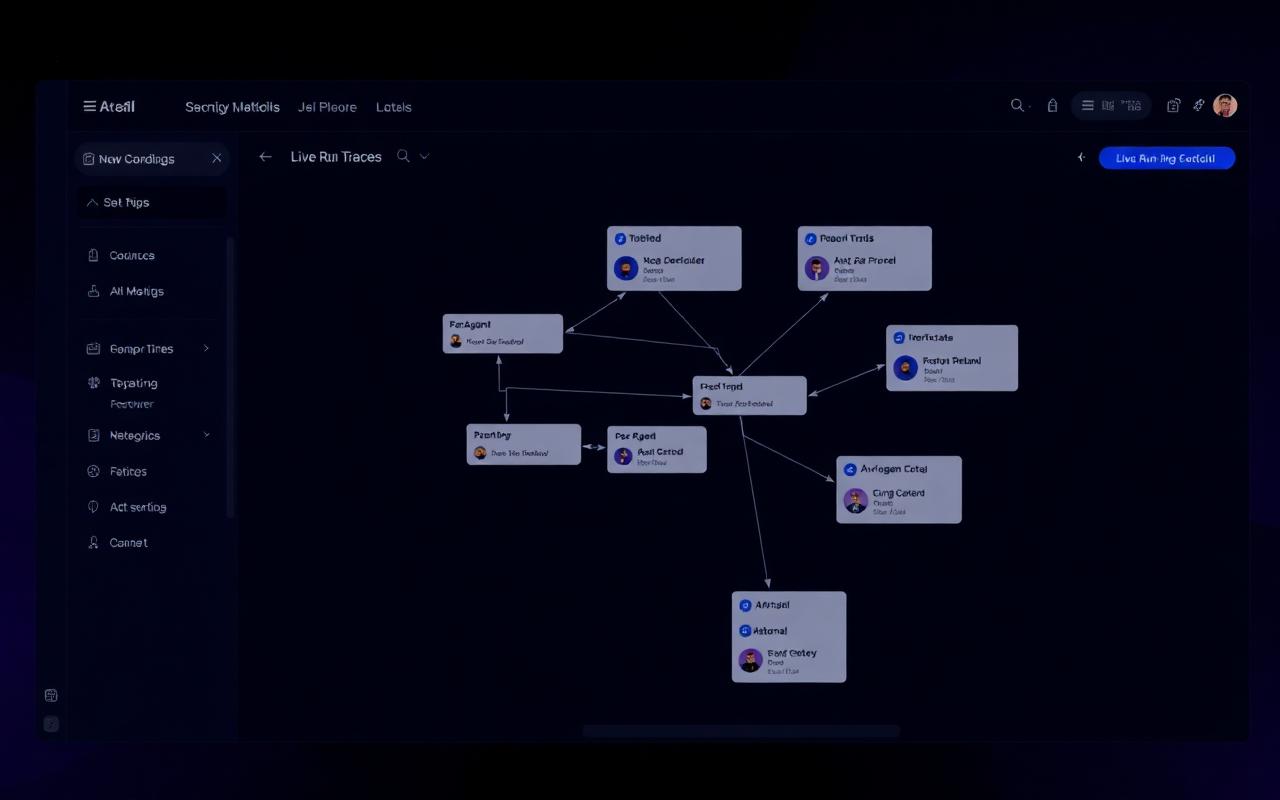
A node canvas where non-engineers compose logic, with live run traces rendered on the same graph.
04 · ENGINEERING
Durable job execution with replay, per-tenant rate limiting, and an agent runtime with tool-calling and audit logs.
05 · CHALLENGES
Five tools, zero shared state
A lead touched the website, the inbox, the CRM and the calendar, and no system knew the full picture, so follow-up was slow and duplicated.
Non-engineers had to own the logic
If every workflow change required a developer, the system would rot within a quarter.
AI acting without guardrails
Agents that email prospects need permissions, limits and a full audit trail before anyone will switch them on.
06 · PROCESS
Every touchpoint emits an event; every automation subscribes. Adding a channel became a producer change, not a rewrite.
A node canvas where revenue ops build branching logic directly, with live run traces drawn on the same graph they authored.
Long-running workflows survive deploys and outages, with replay from any step and per-tenant rate limiting.
Tool-calling agents constrained by scoped permissions, spend limits and full action logs, with human approval gates where stakes are high.
07 · THE SOLUTION
- Drag-and-build workflow canvas with versioning
- Live run traces and step-level replay
- Inbox, CRM, calendar and enrichment integrations
- AI qualification and reply drafting inside guardrails
- Routing and round-robin assignment rules
- Per-tenant rate limiting and spend caps
- Audit log of every automated action
08 · ARCHITECTURE
- Next.js app with a canvas-based workflow editor
- Durable worker runtime with replay and retry semantics
- PostgreSQL for workflow state, runs and audit history
- LLM agent runtime with tool-calling and permission scoping
09 · RESULTS
- Sub-minute first response on inbound leads
- 34% higher qualified-to-meeting conversion
- Ops headcount held flat through 4x lead growth
10 · WHAT IT TAUGHT US
Speed of response beat sophistication of scoring. Sub-minute first contact moved conversion more than any model tuning we did afterwards.
11 · STACK
RELATED CASE STUDIES
RELATED READING
RAG systems that survive production
Most retrieval systems die in the gap between a convincing demo and a Monday morning with real questions. Here is the architecture that holds.
Agents need permissions, not personalities
The interesting part of an autonomous agent is not what it can do. It is the exact list of things it is allowed to do, and what happens when it tries something else.
How to scope a six-week MVP
The hard part is not building fast. It is deciding what not to build without cornering yourself in version two.