
FINTECH · 2023-2025
Fibu | Case Study
Ledger-grade accounting automation: documents in, reconciled books out, with an AI layer that explains every entry.
00 · CONTEXT
Fibu automates bookkeeping for operators who never wanted to be bookkeepers. Documents arrive by email, upload and bank feed; correct, auditable double-entry records come out the other side, with an AI layer that can explain the reasoning behind every posting.
01 · PROBLEM
Finance teams were drowning in receipts, invoices and bank statements, reconciliation ate a week out of every month.
02 · STRATEGY
Treat bookkeeping as a pipeline, not a form. Every document flows through capture, extract, classify, reconcile, and review with human-in-the-loop only where confidence drops.
03 · DESIGN
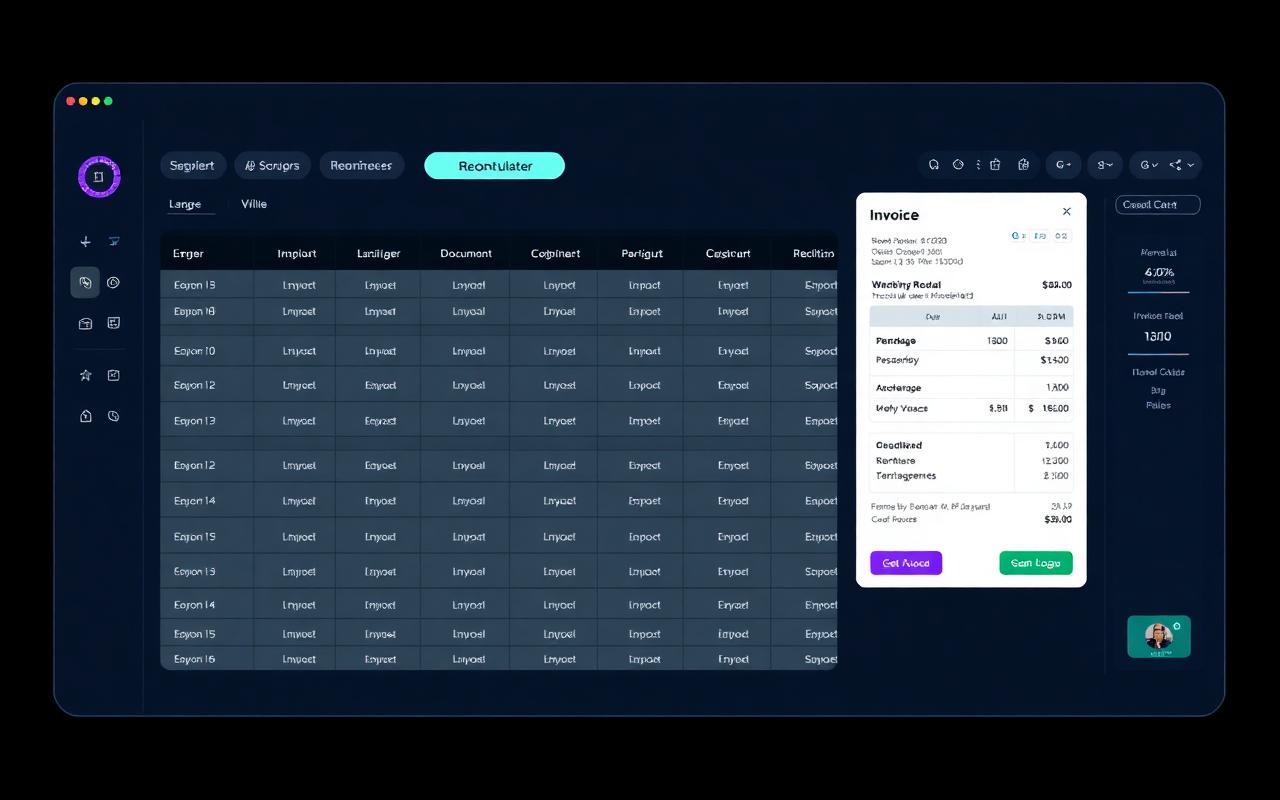
A calm, dense interface modelled on trading terminals: keyboard-first, zero modal churn, and inline confidence indicators on every AI decision.
04 · ENGINEERING
OCR + LLM extraction with a deterministic rules engine on top, double-entry ledger core, and idempotent bank sync connectors.
05 · CHALLENGES
Accuracy is not negotiable
A 95%-accurate ledger is worthless. Anything the system was not confident about had to be routed to a human without slowing the 78% it handled cleanly.
Messy inputs
Crumpled receipt photos, multi-page PDF invoices, foreign currencies, duplicated bank rows, all in the same inbox.
Auditability
Accountants would not adopt a black box. Every automated entry needed a traceable chain from source document to journal line.
06 · PROCESS
Bookkeeping was reframed as capture → extract → classify → reconcile → review. Each stage became independently testable, retryable and measurable.
LLM extraction proposes; a deterministic rules engine and the double-entry core dispose. The ledger never accepts an unbalanced or unexplained entry.
A dense, keyboard-first review surface modelled on trading terminals. Confidence indicators sit inline, so reviewers scan instead of clicking through modals.
Idempotent connectors with replayable ingestion, so a re-synced statement can never double-book a transaction.
07 · THE SOLUTION
- Multi-source capture: email, upload, mobile photo, bank feed
- OCR + LLM extraction with per-field confidence
- Rules engine for vendor, category and tax treatment
- Double-entry ledger core with period locking
- Human-in-the-loop review queue sorted by risk
- Explainability panel citing the source region of each document
- Export to the accountant's existing filing pack
08 · ARCHITECTURE
- Next.js front end with a keyboard-driven review workspace
- Python extraction services with a deterministic post-processor
- PostgreSQL ledger with append-only journal and audit trail
- Idempotent bank connectors and replayable ingestion queue
- Stripe for billing and entitlements
09 · RESULTS
- Month-end close reduced from 6 days to 1
- 78% of transactions auto-reconciled with no human touch
- Audit-ready trail on every automated entry
10 · WHAT IT TAUGHT US
The win was not the model, it was the confidence routing around it. Deciding precisely when to ask a human is what took month-end close from six days to one.
11 · STACK
RELATED CASE STUDIES
RELATED READING
How to scope a six-week MVP
The hard part is not building fast. It is deciding what not to build without cornering yourself in version two.
What to fix before your first engineering hire
A new engineer inherits your habits in week one. Here is what to have in place before they arrive.
How to scope a SaaS MVP you can ship in eight weeks
Cut to one workflow, one user and one proof point. Here are the questions that reveal what to drop.