EDUCATION · 2023-2024
Book Platform | Case Study
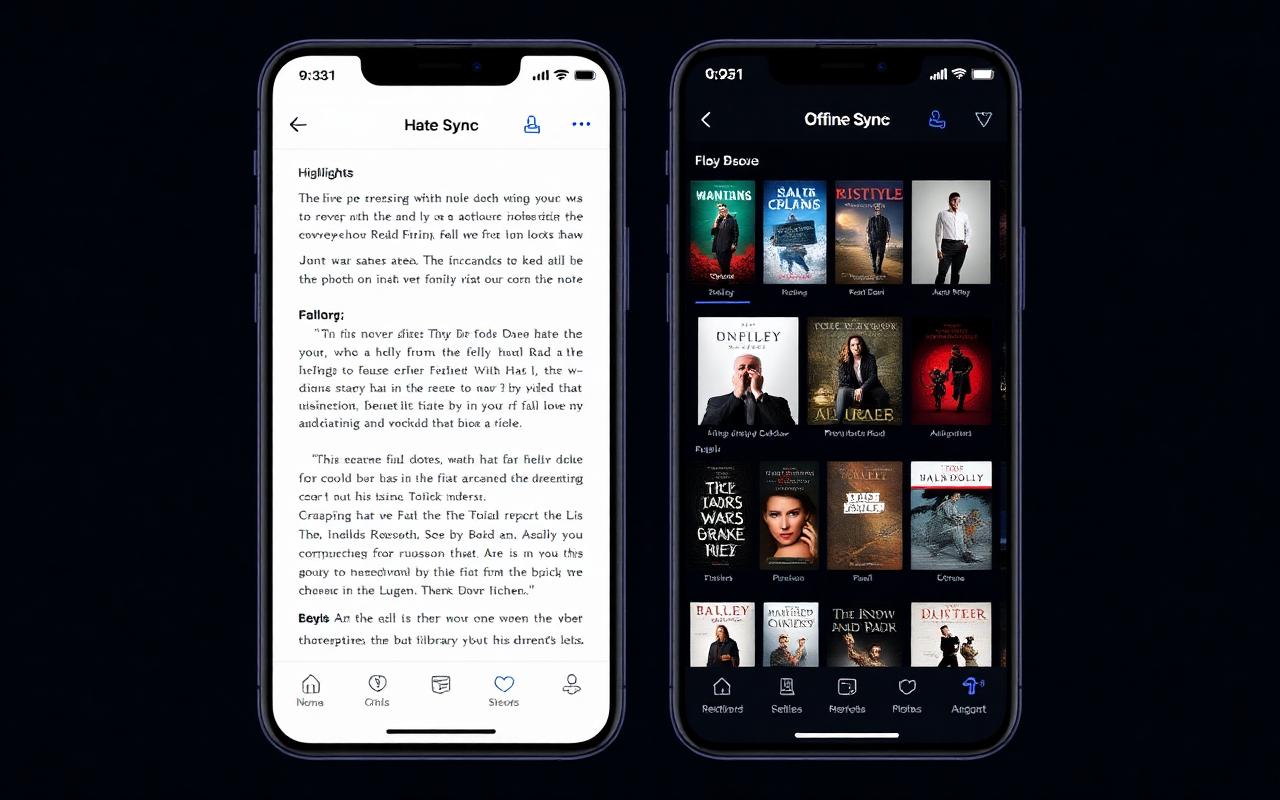
A digital reading platform with offline libraries, annotation sync and creator payouts.
00 · CONTEXT
A digital reading platform for publishers and independent authors: offline libraries, annotation sync across devices, and transparent automated creator payouts.
01 · PROBLEM
Publishers needed a distribution channel that worked offline and paid creators transparently.
02 · STRATEGY
Make the reader the product surface and the payout engine the trust layer underneath it.
03 · DESIGN
A typographic reader with per-title theming and distraction-free controls.
04 · ENGINEERING
CRDT annotation sync, DRM-lite packaging, and automated royalty accounting.
05 · CHALLENGES
Reading happens offline
Commutes, classrooms and rural areas, the reader had to be fully functional without a connection.
Annotations conflict
Highlights made on a phone offline and a tablet online must merge without losing either.
Payout trust
Creators will not distribute where they cannot verify what they earned.
06 · PROCESS
Typography, pagination and per-title theming were built before anything else, because the reading surface is the product.
Annotations model as conflict-free replicated data, so offline edits merge deterministically on reconnect.
DRM-lite packaging keeps titles portable while giving publishers the protection they required to sign on.
Read-events feed an accounting engine that produces per-title statements and scheduled payouts without manual reconciliation.
07 · THE SOLUTION
- Offline library with background download
- Highlights and notes synced across devices
- Per-title theming and distraction-free reading
- Publisher portal with title and pricing management
- Automated royalty statements and payouts
- Reading analytics for creators
08 · ARCHITECTURE
- React Native mobile reader + React web reader
- Node.js services with CRDT-based annotation sync
- DRM-lite packaging pipeline
- Automated royalty accounting and payout jobs
09 · RESULTS
- 400K readers with full offline access
- Creator payouts automated end to end
- 12K titles distributed across web and mobile
10 · WHAT IT TAUGHT US
Offline was the feature that won readers; automated payouts were the feature that won catalogue. The platform needed both to exist.
11 · STACK
RELATED CASE STUDIES
RELATED READING
The interface is the product
Users never see your architecture. They see the two seconds between intent and result, and they judge the entire company on it.
Designing for the empty state
Every product is at its worst the first time someone opens it. Most teams design that screen last.
The anatomy of a homepage that converts
Section order, proof placement and the single decision each block of a page should help a visitor make.