REAL ESTATE · 2023-2025
Real Estate CRM | Case Study
A brokerage operating system: listings, viewings, offers and an AI agent that never forgets a follow-up.
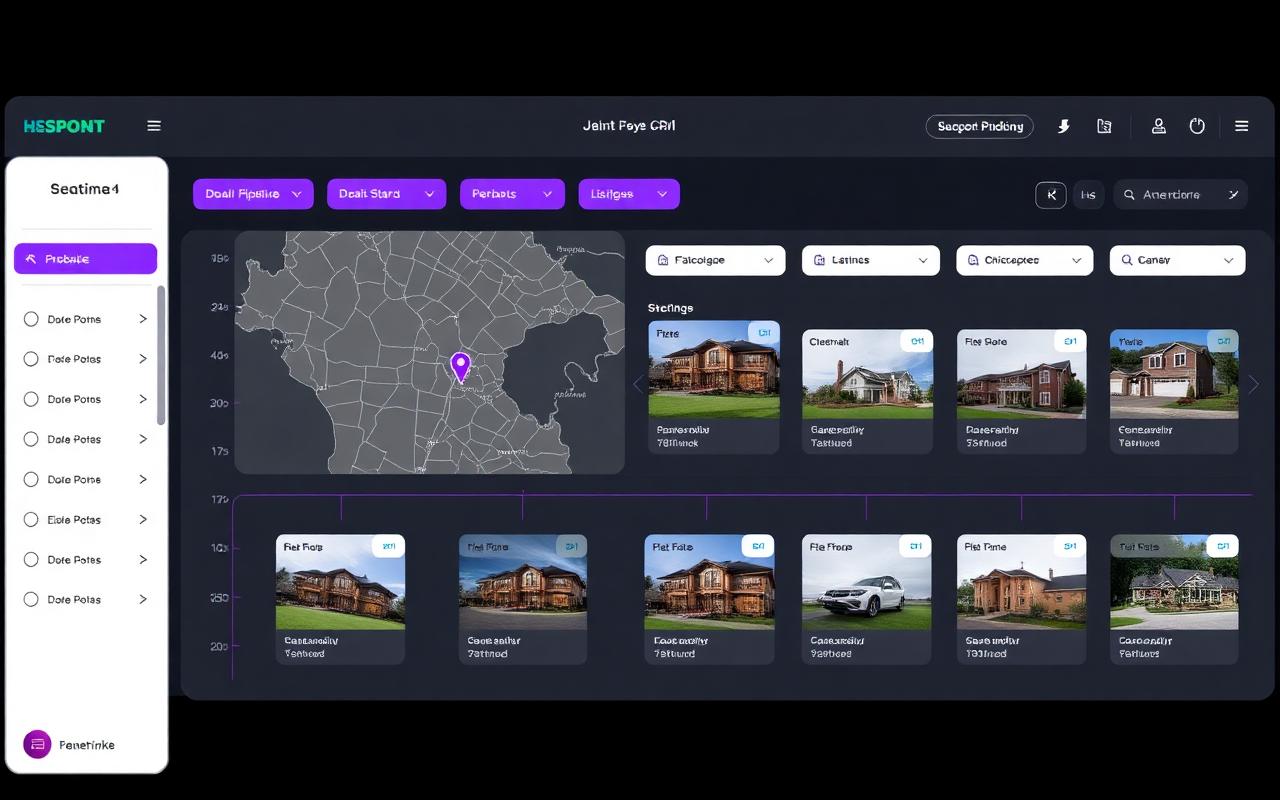
00 · CONTEXT
A brokerage operating system covering listings, viewings, offers and closings for 800+ agents, with an AI follow-up layer so no lead goes cold between a viewing and an offer.
01 · PROBLEM
Brokerages tracked eight-figure pipelines in spreadsheets, and leads went cold between viewing and offer.
02 · STRATEGY
Model the deal, not the contact. Every listing carries its own pipeline, documents and communication thread.
03 · DESIGN
Map-first browsing with a deal rail that stays pinned while agents move through properties.
04 · ENGINEERING
Geospatial search, document e-sign flows, and an AI follow-up agent scheduled against deal stage.
05 · CHALLENGES
Eight-figure pipelines in spreadsheets
Deal state lived in agents' heads and personal files, so managers had no reliable forecast.
Contact-centric CRMs don't fit property
A property has its own pipeline, documents and thread, forcing that into a contact record loses the deal.
Follow-up decay
The highest-value moment is 24 hours after a viewing, and it was the one most consistently missed.
06 · PROCESS
The listing became the primary object, carrying its own pipeline, documents, viewings and communication history.
Agents browse geographically with a deal rail pinned alongside, so context never disappears while moving between properties.
Offer packs, disclosures and e-sign flows generated from deal state instead of re-typed each time.
An agent scheduled against deal stage drafts and sends timed follow-ups, escalating to the human when a reply needs judgement.
07 · THE SOLUTION
- Geospatial listing search with saved territories
- Per-listing pipeline, viewings and offer tracking
- Document generation and e-signature flows
- AI follow-up scheduled against deal stage
- Team and brokerage-level forecasting
- Commission splits and payout reporting
08 · ARCHITECTURE
- React front end with map-first browsing
- Node.js API on PostgreSQL with PostGIS for geospatial queries
- Document pipeline with templated generation and e-sign integration
- LLM follow-up agent with stage-aware scheduling
09 · RESULTS
- 22% faster average deal cycle
- Zero missed follow-ups across 800 agents
- Portfolio-level reporting in place of monthly spreadsheets
10 · WHAT IT TAUGHT US
Modelling the deal instead of the contact changed everything downstream, reporting, automation and agent behaviour all fell out of that single decision.
11 · STACK
RELATED CASE STUDIES
RELATED READING
RAG systems that survive production
Most retrieval systems die in the gap between a convincing demo and a Monday morning with real questions. Here is the architecture that holds.
Agents need permissions, not personalities
The interesting part of an autonomous agent is not what it can do. It is the exact list of things it is allowed to do, and what happens when it tries something else.
How to scope a six-week MVP
The hard part is not building fast. It is deciding what not to build without cornering yourself in version two.